Saturday, 9 July 2011

Review: Aurelia by Anne Osterlund

Princess Aurelia is next in line to rule the kingdom of Tyralt, but she would rather be one of the common folk, free to learn and roam and . . . not marry the next tyrannical prince that comes courting. Naturally, the king wants Aurelia to marry for political power. Aurelia wants to marry for love. And someone in the kingdom wants her . . . dead. Assigned to investigate and protect Aurelia is Robert, the son of the kings former royal spy and one of Aurelias oldest friends. As Aurelia and Robert slowly uncover clues as to who is threatening her, their friendship turns to romance. With everything possible on the line – her life, her kingdom, her heart, Aurelia is forced to take matters into her own hands, no matter the cost.

So this one was a bit of a mixed bag. There were some brilliant loves and some very definite un-loves. One of the big un-loves was that there was no set up or explanation of the hierarchy or society, the reader is left to fumble along feeling stupid for a few chapters whilst you work it out, and even then it feels a little bit fuzzy.

It feels like the book wants to be high fantasy, and there are moments when it has a distinct Tamora Pierce edge to it. Then on the next page there would be modern Americanisms and really modern names – I mean Daria on the one hand and Brian on another? It just seems a little confusing. Pick a genre and stick with it. There’s also a lot of rule breaking when it comes to the Princess. She seems to have a lot more freedom than we’ve come to expect for any royal in a fantasy book. This is explained to a certain extent with her rebelliousness and sneaky ways of getting out of the castle, but at times it did seem a little far-fetched.

My other big grump is that the real meat of the story didn’t happen until about two thirds of the way through the book. I know we needed the set up, but by the time the real plotting and court intrigue and politics came in there wasn’t much book left to cover it all. It felt like the book was trying to be one thing and barely managed to scratch the surface of it – which was a huge shame as there was so much potential here.

I loved the Tamora Pierce esq feel that came through – it’s been a while since I’ve read anything that wasn’t urban fantasy, so it was great to just plunge straight into a fantasy book. I did feel a little out of my depth with no rules or vague ideas of the place being explained, but the characters were funny and engaging, so I didn’t mind I was just happy to go along for the ride.

The prose was at time breathtakingly gorgeous, and at others a little cluttered so it felt a little like some poetic imagery was over laboured, which was a shame because Osterlund had some really beautiful prose mixed in – usually at the points where it didn’t feel like she was trying too hard.

The first half of the book tended to leap forward in pits and stops and there were some bits I was racing to find out what would happen next, and then others where I’d find my interest waning. Again, it wasn’t until the real intrigue kicks in much later in the book that it really got going, and I really wish that that had come in sooner, because there could have been some brilliant story telling taken from that.

But the basic idea was really good, and as I said, if it had been delved into sooner I probably would have loved this book. Osterlund does have a very compelling style and I was sad that I didn’t get involved earlier, because her writing has the edge of being something amazing – it just felt like it was hidden at times.

So all in all, not really sure what to make of it. I enjoyed it, but it probably won’t be one that I’ll return to. I am glad I read it though, and I’ll be sure to check out the author’s next work – this was her debut novel so maybe some of the creases I’ve pointed out will be ironed out in the next book. However, if I want to go back into fantasy realms I think I’ll stick with Tortall and Tamora Pierce next time.

Friday, 8 July 2011

Review: I'll Be There by Holly Goldberg Sloan

Raised by an unstable father who keeps the family constantly on the move, Sam Border hasn't been in a classroom since the second grade. He's always been the rock for his younger brother Riddle, who stopped speaking long ago and instead makes sense of the world through his strange and intricate drawings. It's said that the two boys speak with one voice-and that voice is Sam's.
Then, Sam meets Emily Bell, and everything changes. The two share an immediate and intense attraction, and soon Sam and Riddle find themselves welcomed into the Bell's home. Faced with normalcy for the first time, they know it's too good to last.

This book was a bit of a mixed bag for me. The first two thirds were stunning – the language was deceptively simple but really beautifully constructed, the tension was high, and everything about it was just brilliant. However, after this point something lost me. I’m not sure if I was tired, or whether  the style shifted – but around the point where YET ANOTHER BAD THING HAPPENED, and continued to happen (there was a string of really bad things happening to the boys for a while) the book lost me. It just reached a point where it seemed too insane to even contemplate, not that I stopped caring about the awful things happening to the two boys.

It was still interesting, and it wasn’t to the point that I gave up and put the book down for the night, but my attention definitely wavered, and I regarded the more bad things as a bit ludicrous, rather than upping the ante on the stress factor. It was like watching the film ‘Serendipity’ – where you just want to scream at how close it all comes to being all right so many times, and they just miss each other!

Then the book picks up a bit, and it swept me up into the action again – although I wasn’t quite as taken as the first part of the book, it was still great to get lost in the story again. But then the end did something horrible. And I’m not talking about the end of the book what happens, I mean the style in which it’s covered. It was like one of those movie montages where you freeze frame on each character and get a summary of what happens to them. It just felt so disjointed, and after such a beautiful start to the book it made me want to cry that it didn’t get the ending I felt it deserved.

Which made me start thinking, why was I left so dissatisfied? Except obviously for the ending, which I’ve already explained. And I started to realize that it was partly the characters. In the first part of the book I was so swept up in how gorgeous and brilliant it all was that I didn’t really think about it, but my mind started to wander later on, and it felt like some of the characters weren’t given enough depth to make me really care. They were just there as tools, not as people.

For example Bobby Ellis starts out not all that bad – little bit creepy I grant you, but essentially an  alright kind of guy. Then he turns into the comedic caricature where really ridiculously bad things happen to him because he’s such a bad person. Only it just seemed out of place and ridiculous because there was no build-up of bad person, it just suddenly happened.

Which made me look at the rest of the characters, and with the exception of Sam, Riddle and to some extent Emily, they all seemed to be there as flat plot devices – they had no depth to make me care about them. They had backstory and other little bits, but it didn’t seem to be enough. They were more cut out silhouettes with a specific purpose than people that I cared about.

However the writing was for the most part simplicity at its best – an array of perfect pieces of prose that made you really feel for the two brothers in their unfair world. I loved the connections, the points of meeting for a multitude of characters, although at times it felt like there wasn’t enough time to get to know each of them properly – and this was where they turned into cut outs. There to further the story and serve a purpose rather than being there in their own right.

So as I said, I’m torn. I wanted to love this book. In fact I started out loving this book, but somewhere along the way it lost me. And that’s just me and my personal preferences, but I’m really disappointed that we broke up part way through.  However, the first half was completely spot on, and I’m going to remember that when I look back on this.

But what did you think? Love it? Hate it? Think I’m crazy for falling out with it? Let me know in the comments below.

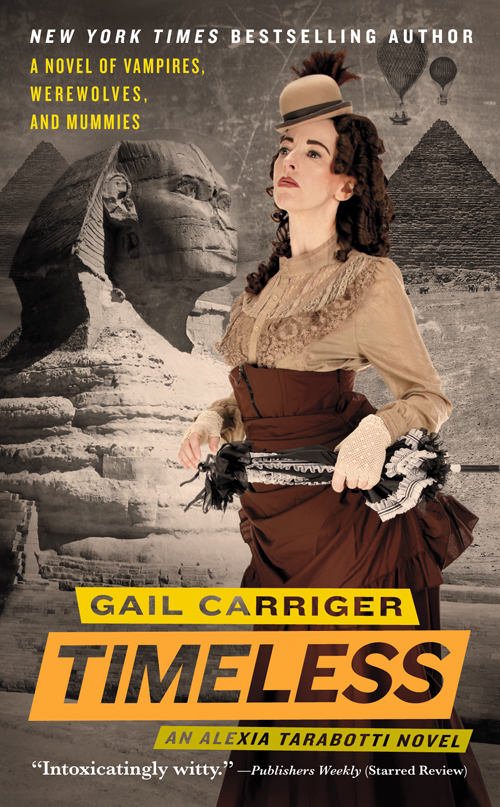
Review: Heartless by Gail Carriger

Lady Alexia Maccon, soulless, is at it again, only this time the trouble in the air is not her fault. When a mad ghost threatens the queen, Alexia is on the case, following a trail that leads her deep into her husband's past. Top that off with a sister who has joined the suffragette movement (shocking!), Madame Lefoux's latest mechanical invention, and a plague of zombie porcupines - and Alexia barely has time to remember she just happens to be eight months pregnant. Will Alexia be able to figure out who is trying to kill Queen Victoria before it's too late? Is it the vampires again or is there a traitor lurking about in wolf's clothing? And do they really have to take up residence in Lord Akeldama's second best closet?

I’ve tried to keep spoilers for HEARTLESS to a minimum. However due to it being the fourth in the series there may be spoilers for the preceding three books. Consider yourself duly warned.

I think this book has proven once and for all that when I’m desperate to get my hands on something enough, I’m not above bribery, as one poor bookshop attendant can testify to.

The point is that ‘Blameless’ left us in such a tantalizing place that I simply couldn’t wait to get back into Alexia’s world and see what on earth she was going to get up to next.

And ‘Heartless’ doesn’t disappoint. It dives straight in to Alexia at eight months pregnant and highly inflated as a result. This doesn’t stop the formidable Lady Maccon though, it merely slows her pace to a waddle, and demands assistance to stand up. Oh and plenty of falling on her bustle. I am amazed the poor child didn’t miscarry after the amount of falling about she did.

Alexia at full strength is amusing. Alexia at full pregnancy is downright hilarious. She doesn’t seem to show any fear or worry for the ‘infant inconvenience’ – her husband does most of that for her. But then I would have been alarmed had she started showing particular emotions. Alexia is after all lacking in the soul department.

Alexia is fab, but Ms Carriger also excels at secondary characters, and it was so good to get more of an insight into some faces we already know. Maccon stopped being an overbearing alpha and turned into a man, and I have to admit to breaking down a little when he broke down in the darkness by Alexia. And Lyall – it’s always the quiet ones. It was good to see some extra layers to the quiet and unobtrusive beta. But sometimes it’s also the loud and annoying ones – read here Felicity, who I wanted to smack soundly with a parasol. I knew she was irritating, but this takes the biscuit. Biffy – oh my poor sweet darling, he is one of the most fascinating characters to watch as he battles his past, his present and his future as they all threaten to overwhelm him.

But perhaps the two awards for secondary characters who I want to keep with me for always go to: Ivy Tunstall. I very nearly died from over laughing at the Ivy being inducted into the Parasol Protectorate. And thank goodness Alexia finally is realizing that Ivy isn’t all silly hats!

And of course, Lord Akeldama. Having more of him around instead of just the odd moment when Alexia pops round for tea made for some interesting character insights. And I think that was the biggest thing for me, the different facets each character revealed this time, which made me view all of them in a slightly different light than I had at the end of ‘Blameless’. I won’t go into too much detail here as I don’t want to ruin it for those of you who haven’t read this instalment yet, but I may come back and do a discussion post at a later less spoilery date, because I really found the character development to be the most exciting thing, and it left me quiet eager to find out where they all go from here.

Everything about this book is sheer sparkling brilliance. The writing is witty, providing some very necessary light relief at a time when we could all do with a giggle. The characters are thoroughly layered and deeply satisfying to follow, and Ms Carriger’s imagination knows no bounds. Zombie Porcupines?... As pets?... No one else could manage to pull off such a stunning feat of elegant manners, witticisms, ridiculous hats and tea.

Heartless is available now at all good bookstores, and you can read Gail Carriger’s Q & A with Bookaholics Anonymous here.

Thursday, 7 July 2011

Author Q & A with Gail Carriger

The Parasol Protectorate Series, written by the fabulous Gail Carriger is one of the wittiest Steampunk romps available at the moment. To celebrate the release of ‘Heartless’ the fourth book in the series, in the UK today, Gail was lovely enough to answer a few questions about the series, her writing habits, and whether tea really does trump all.

“Your latest book in the Parasol Protectorate series Heartless is just out, can you tell us a little bit about it?”

Well, I tend to try to parody different types of Victorian literature with each Parasol Protectorate book. Soulless poked fun at the early romance novels, Changeless went back to the gothic roots of all my favourite genres, Blameless was intended to be an Alan-Quartermian-style Boy's Adventure novel. Heartless is a cosy Sherlock-Holmes-style mystery. Alexia hasn't Sherlock's mind but she has his practical approach to problem solving, and his propensity for charging about willy-nilly no holds barred. However, the role of Dr. Watson will be played by an every increasing bevy of adorable young men. A girl's gotta have her fun!
Book One of the Parasol
Protectorate Series

“If readers haven’t yet discovered your fabulous series yet, how would you tempt them to pick up a copy of Soulless?”
Soulless is Jane Austen does urban fantasy meets PG Wodehouse does steampunk. It features a soulless spinster confronting Queen Victoria’s grumpy werewolf investigator over the issue of lisping vampires.

“Have you always wanted to be a writer? Was it something in particular that drew you to becoming one?”
I always wanted to be an archaeologist, writing was rather more like breathing, just something I did. It was only with Soulless that I realized I might actually have a career as an author. I still haven’t
recovered from the shock.

“Do you have any quirky habits when writing or a particular time of day when you’re most creative?”
Oh I’m nothing if not civilized. With a project due and no day job
(mine’s intermittent) I write from 2 to 7 every weekday – with breaks
for tea. The rest of the household, with the exception of the cat, is
quite respectful. I have a closed–door policy. Which is to say: if the
door to my room is closed my policy is to throw the nearest moveable
object at anyone who disturbs me. They’ve learned. Even the cat.

“What is your weapon of choice if anyone disturbs you whilst you’re writing?”
Unfortunately, sometimes the nearest moveable object IS the cat.

“How did you come up with the idea for the books?”
Book Two of the Parasol
Protectorate Series
The simple fact is: this was what I wanted to read. I like steampunk but it tends to be a little too dark and riddled with technobabble for me. I enjoy urban fantasy but am not wild about a modern setting. So I thought I might just combine the two, and then shake it up with a jot more romance and a whole lot of comedy. Then I started thinking about what kind of world could accommodate all these different elements. I’m familiar with the Victorian era and I find it a rich source of amusement in and of itself. Those ridiculous fashions and that obsession with etiquette seem the perfect time period to drop in vampires (dictating such things) and werewolves (chaffing against them) not to mention steam technology. It seemed to me that what comedy I couldn’t supply with plot and character, an alternate Victorian London could provide just by being itself.


“The research must have been quite awesome for the series – were there any books or sources you found particularly useful?”

I had a fair bit of expertise in certain aspects of the era (fashion, food, manners, literature, theatre, upper class courting rituals, antiquities collecting) when I started but great gaps in other areas that I quickly realized needed to be filled. I spent a lot of time researching the gadgetry and technology of the day, travel and communications techniques, medical and hard science advances, not to mention other things like major wars and military strategies,
configuration of army regiments, geographical lay out of London in the 1870s (shops and streets names), newspapers, and government policies. I also looked into vampire and werewolf lore at the time. That’s the thing, you never know what information you are going to need until you need it, and inevitably the internet doesn’t have it. Since I’m writing alt history I can always disregard the facts, but I like to get it right first, before I mess with it. Most people won’t care to look up the details (or get it wrong by confusing my setting with
Austen or mid–Victorian, I’m specifically 1773) but even if it doesn’t make it into the book, it will irritate me if unwritten background information is flawed. Here is a blog about the sources I use when researching the Victorian Era.
http://gailcarriger.livejournal.com/154599.html

“Are any of the characters based on people you know?”
Book Three of the Parasol
Protectorate series
I love the ridiculous, in life, in literature, in television. Like most authors, I find myself borrowing from any or all of these places when building characters. I don’t like to be too stereotypical, if you
continue to read the Parasol Protectorate series you will find I have built up some archetypes in Soulless that I will take great glee in tearing apart in subsequent books. I do find myself, now, stopping in
the middle of a book or a movie I’m enjoying, stepping back and thinking: "I really love/hate this character, why? How did the writer do that? What qualities annoy/amuse me? What’s the trick?" It can get a bit aggravating, because it’s hard to simply immerse myself and be 
entertained these days.

“Do you ever find yourself having conversations with the characters, or have them being troublesome when writing?”
Far too often, I suspect. My sanity may be in question. Sometimes I even have conversations with myself as though I am a character.

“Which was the hardest book to write in the series?”
That's a toss up between Blameless and Heartless. Blameless needed a 1/3 rewrite for characterization reasons which was tough and required complex tread weaving throughout the whole book. Heartless just gave me a lot of stick as I went along. I also had more changes from my editor on Heartless than any previous book.

“What are you most proud of about the series?”
I'm happiest when someone writes me to say I embarrassed them my making
them laugh in public. That really makes me happy. I think I'm most proud, however, of my well rounded secondary characters. People really seem to identify with them.

“Everyone I’ve spoken to who’s read the series was first attracted by
your awesome cover and tag lines. Do you love them, and did you have
any say in the design?”
You know, I think the tag line is all Orbit’s doing. I did, however, have a hand in the cover. Very few authors are so lucky. I have a whole blog about how that came to be.
http://gailcarriger.livejournal.com/108176.html

“How difficult was it naming the books?”
Book Four of the Parasol
Protectorate Series
Not difficult at all. Each title has something to do with both the plot and key character developments, usually of a secondary character as well as Alexia. They came quite naturally to me. It took a couple
days and five of my closest girlfriends, however, to come up with a 
series title. We painted a mural while we bandied about ideas.

“I adore your theories on Victorian society – any chance of a full re-explained history at some point?”
Well, like many authors, I have much of it in my head or jotted down. Sadly, I don't have the time to publish or write it online in a cohesive manner. Right now, I am in the enviable position of always having a new novel to write. I always encourage my fans to speculate, however, so I'm hoping future guest blog posts may come on the subject.
Out in 2012 - Book Five of the
Parasol Protectorate Series

“Will you stick with steampunk for future books, or will you be doing something wildly different next?”
Steampunk for the next few years but I'd love to branch out at some point.

“Will you be doing a tour or signing over in the UK at some point? If there’s nothing planned can we bribe you with tea?”
I'm hoping to make it to London next spring, probably not much more than London. Although I might jet down to Devon to see my family.

“And finally, tea, treacle tart or pesto?”
Tea. No question.

‘Heartless’ is available in all good book stores, and to order on Amazon here. My review of the book will appear on this site shortly.

Tuesday, 5 July 2011

Review: Looking For Alaska by John Green

“In the dark beside me, she smelled of sweat and sunshine and vanilla, and on that thin-mooned night I could see little more than her silhouette, but even in the dark, I could see her eyes – fierce emeralds. And not just beautiful, but hot too.”
Alaska Young. Gorgeous, clever, funny, sexy, screwed up – and utterly fascinating. Miles Halter could not be more in love with her. But when tragedy strikes, Miles discovers the value and the pain of living and loving unconditionally. Nothing will ever be the same.

‘Looking for Alaska’ has been haunting me over the last few weeks. It has been there every time I’ve turned on the internet, browsed review sites, or gone into a bookshop. In the end I caved and my copy arrived this morning. I didn’t mean to sit down and read it then and there – I was in the middle of a very captivating different book! But I glanced at the first page, and then I flipped to carry on, and before I knew it I was halfway through and it was lunchtime.

The book is one where I actively feel as I read it that it is important – that it will change me in some way, and I will learn and grow from reading it. It is one that I want to go back to again and again because it was so painfully beautiful. I laughed, and I cried, and I felt Miles’ pain as though it were my own. Green’s insights on Death and the great unknown were beautifully expressed and offered some form of comfort. A way of maybe finding a way through the grief over time and coming to terms with the tragedy that occurs in everyone’s lives at one time or another.

The novel gives hope.

Despite Mile’s stand offish behaviour at the start of the novel, his frank assessment of the world and his place in it was intriguing and drew me in. He was an appealing narrator – frank, sometimes explicit in his teenage adolescence, funny, engaging and philosophical. A very good start to have such an interesting narrator, but the cast of characters that accompanied him were equally vivid. They were mundane yet extraordinary – and all flawed, yet ultimately forgiven for their flaws. It was just such a genuine portrayal of human tendencies and emotions. Of the tangled emotions and guilt that underlies relationships, and it was handled so deftly so as to seem not at all contrived, merely an insight onto a particular string of friendships. And an intriguing exploration of how you can never know a whole of someone – just the pieces they offer to you.

The countdown was an inspired way to give the whole thing an edge – and underlying sense that we were waiting, and that meant that even in the quiet of peaceful moments in the ‘Before’ there was the tension of waiting for that great unknown we were counting down to. And after simply made my heart break. I don’t want to go into detail and ruin it for those that haven’t yet read the book.

The smatterings of last words and philosophy gave the book an even deeper layer to delve into, and I personally found it fascinating to have these extra layers of class to explore as well. Everything was linked – every day and moment shared one that helped to build a picture of the whole imperfect thing.

It’s a book I want to go back to again and again. Exquisite, painful, and filled with hope as well as the idea of a beyond and forgiveness. I’m so glad this book chased me, and that I finally gave in and read it.

“’It’s very beautiful over there.’ I don’t know where there is, but I know it’s somewhere, and I hope it’s beautiful.”

Saturday, 2 July 2011

Review: The Drina Series by Jean Estoril

The last month has been filled for me with moving house, and that meant unpacking a lot of books I haven’t touched since I was a child. The ‘Drina’ books were a favourite of mine growing up – in fact they were a favourite of my mother as well, as they were first published in 1957.

The series consists of eleven books, detailing the life and adventures of Drina Adams from age ten (roughly) to age eighteen. Drina, brought up by her grandparents – soft and gentle grandfather and strict and over bearing granny – after her parents were killed when she was only 18 months old. Drina is desperate to be a ballet dancer, but her granny is determined that she have nothing to do with the world. However Drina does eventually win, and we learn more about her past, her legacy, her legendary ballet dancer mother, and her travels around the world – as well as her learning to be a ballet dancer – throughout the series.

The series has aged remarkably well – particularly considering I’m reading them over half a century since the first books graced the shelves. Yes there are subtle differences – no mobiles, no computers, there are still corridors and compartments in trains and telegrams. But these are so well blended that it doesn’t seem jarring.

Yes there are turns of phrase that are awkward, and the editing is a bit naff in some of the books, but overall they are a lovely series – one that translates well from child to adult.

Drina is – whilst at times a little too highly strong – a mostly lovely character. I felt for her, and ached for her, and raced through the pages to see what would happen to the charming heroine next.

The secondary characters sometimes fall into stereotypes, but they’re so vividly created and delightful to get to know – apart from the nasty ones which 
I want to throw things out – that it really didn’t bother me. And Drina seems to have no problem making friends, which lead to a vast cast of well-crafted individuals with compelling backstories – Jenny and her tragic time growing up, the refugee Ilonka, born and bred Londoner Rose. Oh and not forgetting the boys – flamboyant Paris born Igor Dominick the younger, and the fabulously dreamy Grant Rossiter…

After reading them again, I think I’ve discovered where I got my early yearning to travel, because almost every country Drina visits is one on my list of places I’m desperate to visit. Wales, Switzerland, the Chilterns, Italy, Edinburgh, New York, Paris, Madeira… And every single one of them exquisitely and vividly described.

And the romance… It’s subtle, and completely different from anything we experience in modern novels. There is no epic first kiss, and for the most part it is a long distance yearning, but it’s beautiful and it’s painful and it’s exquisite when they’re together.

And whilst Drina’s life seems at times a little charmed, there are hardships in there, it isn’t all beautiful awesome, and her journey is by no means an easy road, and I think that gives the series such a good believable grounding to branch off into fiction from.

The ballet is not all consuming, but plays a very great part, and completely takes over whilst your reading. I always find myself yearning to travel and take up ballet whilst reading the books – which I always take as a good sign if it makes me long to do something I wouldn’t normally do.

My only complaint was how quickly Drina falls in love, and sometimes how harsh and over bearing her Grandmother can be.

Whilst there are always favourite books in a series, overall it creates a very beautiful telling of an extraordinary child’s early life.

The books in the series:

1.   Ballet for Drina
Ever since she was very small, Drina Adams has wanted to be a ballet dancer. Her Grandmother disapproves, and it’s hard for Drina to find a way to have the music and ballet lessons she needs. But Drina was born to dance – and this is the story of how she found out the truth about her background, and how she began her career.

2.   Drina’s Dancing Year
At last Drina can audition for the Dominick Ballet School in London – and she is accepted as a pupil. Settling in is hard, and Drina needs all the determination to succeed. Her greatest dream is to be chosen for the Dominick’s Christmas concert – but her teachers have an even better surprise in store!

3.   Drina Dances in Exile
The news that she must leave the Dominick Ballet School fills Drina Adams with dismay. How can she bear to leave London, her friends and the main school, for the sleepy second-best of the residential school in the country? But Drina finds that country life brings her some unexpected rewards.

4.   Drina Dances in Italy
Drina Adams is back at her ballet school in London after a year in the country. Her talents as a dancer are blooming, and her visit to Italy to stay with her father’s family ends in a triumphant surprise as she dances with the touring Ballet Company for the first time.

5.   Drina Dances Again
Still dreaming of Italy and the wonderful experience of dancing with the famous Dominick Ballet Company while still only fourteen, Drina returns to London and the realities of Ballet School life. An unlucky injury seems a disastrous start to the new term, until Drina is offered the chance to try out her acting talents. But will she ever dance with the Dominick again?

6.   Drina Dances in New York
Drina is off on an exciting trip to New York with her grandparents, traveling by sea on the Queen of the Atlantic. Any regrets she has about missing a few weeks at the Dominick Ballet School soon vanish as she finds new opportunities to dance – and experiences the first pangs of love!

Drina Dances in Paris
Drina finds it hard to settle into her old life in England after her exciting trip to New York. But she throws herself back into her dancing again, and tries to push her memories out of her mind. Then she has the thrilling offer of a trip to Paris – where she has a wonderful surprise.

8.   Drina Dances in Madeira
Drina is bitterly disappointed when she hears the her long awaited holiday to Germany is cancelled. But her Grandmother offers her some wonderful alternatives: a Mediterranean cruise, or a visit to Scandinavia of a trip to Madeira… When Drina remembers that the Lingeraux Ballet Company are also going to Madeira for the summer she has no trouble making up her mind!

9.   Drina Dances in Switzerland
Although it’s a new term at the Dominick Ballet School, Drina won’t be starting lessons again for two whole terms. Her grandparents are moving to Switzerland for the winter, and Drina is sent to a stuffy Swiss finishing school. Drina is bitterly disappointed: how will she be able to keep up with her ballet when she’s so far away from her teachers and the theatre and her dancing friends in London?

10.                Drina Goes on Tour
Drina is horrified when her long kept secret about her glamorous past is discovered. And she is totally unprepared when she becomes the centre of a blaze of publicity. How will this news, and all the resulting distractions, affect her life at the Dominick Ballet School?
 
11.                Drina Ballerina
As Drina’s eighteenth birthday approaches, the young ballet dancer faces some important decisions. The Director of the Dominick Ballet School puts an exciting proposal to her concerning the Company’s new programme. And Grant, Drina’s love for the past four years makes her an offer of a very different kind.

Thursday, 30 June 2011

Books I'm Squeeing About in July

How is it already the end of June? I’ve been moving this month and there’s barely been time to read, but somehow I’ve crammed some books in around the painting and packing, and there have been some truly awesome books floating around.
Luckily most of the unpacking is done, because there is a positive deluge of books appearing in July, most of them being released on the 7th quite randomly… I think it’s some sort of conspiracy.


Lady Alexia Maccon, soulless, is at it again, only this time the trouble is not her fault. When a mad ghost threatens the queen, Alexia is on the case, following a trail that leads her deep into her husband's past. Top that off with a sister who has joined the suffragette movement (shocking!), Madame Lefoux's latest mechanical invention, and a plague of zombie porcupines and Alexia barely has time to remember she happens to be eight months pregnant.
Will Alexia manage to determine who is trying to kill Queen Victoria before it is too late? Is it the vampires again or is there a traitor lurking about in wolf's clothing? And what, exactly, has taken up residence in Lord Akeldama's second best closet?

Gail Carriger leapt onto my all time favourite authors list when I read her debut novel ‘Soulless’. Now the fourth book in the ever fabulous Parasol Protectorate series is due out, and I cannot wait.
I mean just look at that blurb! ZOMBIE PORCUPINES PEOPLE. Ahem. Carriger seamlessly blends brilliant humour, steampunk, sleuthing, tea, parasols, werewolves, vampires, fashion, and terrible hats into one brilliant blend. If you haven’t read her why the hell not? And if you have, I imagine you get why I’m so excited about this latest book.

A Q&A with the author herself will be available on this blog on the 7th July to celebrate the release.


Melissa Mar is known to young adult readers as the author of the popular faery series Wicked Lovely. Her debut leap into adult fiction lands her in the small community of Claysville, a town where the dead walk free unless there their graves are not properly tended. Into this eerie maelstrom, Rebekkah Barrow descends as she returns to a place that she once believed she knew. Kelley Armstrong justly described Graveminder as "a deliciously creepy tale that is as skillfully wrought as it is spellbindingly imagined." A new genre author to watch.

I fell in love with Melissa Marr’s captivating faerie series that all began with ‘Wicked Lovely’, and I didn’t need anything more than the fact that she’d written this book to recommend it to me. Her writing is an incredible fantasy blend with some beautiful prose and incredible imagination. And now after reading this blurb, I’m even more excited to see what she’s come up with after the epic faerie politics of the last series.


1586 – London, England. Sixteen-year-old Mercy Hart is the daughter of one of London’s richest – and strictest – cloth merchants. Kit Turner is an actor and the illegitimate son of the late Earl of Dorset. A chance encounter finds Kit falling for the beautiful Mercy’s charms, but their love is forbidden. A merchant’s daughter and a vagabond – it simply cannot be. If Mercy chooses Kit she must renounce her family name and leave her home. Will she favour duty over true love, or will she give Kit his heart’s desire?

This series is one of the best historical romances in the young adult section at the moment. Extremely well written and researched, Edwards really drops you right into the centre of Elizabethan England. I’ve loved the stories of the last two books in the series, and whilst I wasn’t that keen on Kit in the last book, I’m hoping a closer time with him will win me over.


Simon Van Booy brings to the page his unique talent for poetic dialogue and sumptuous imagery in this his remarkable debut novel of love and loss, dependence and independence. Rebecca has come to Athens to paint. Born and raised in the south of France, Rebecca's mother abandoned her and her sister when they were very young, left to be raised by her loving yet distant grandfather. Young and lost, she seeks solace in the heat of Athens. George has come to Athens to translate language. Dropped off at a New England boarding school when he was a child, he has close to no relationships with anyone, except the study of ancient language and alcohol. Henry has come to Athens to dig. An archaeologist, Henry is on-site at Athens during the day, and roams the Agora on the weekend. Three lost and lonely souls whose worlds become inexorable enmeshed with consequences that ripple far among the ruins of ancient Athens.

Simon Van Booy’s prose is so exquisite it quite often reduces me to tears. He’s authored two short story collections – ‘Love Begins in Winter’ is one of the most beautiful pieces of writing I have ever read – and now moves on to this, his debut novel. His view on human emotions, specifically love, and all the different forms it can take are breath taking, and as I said, his prose is so perfect it can make me cry with one brilliantly turned sentence. The only thing I ever wanted was to have more of the stories, so I cannot wait to read this and see how his deft handling of short pieces translates into a full novel.


Trying to work things out with Nash—her maybe boyfriend—is hard enough for Kaylee Cavanaugh. She can't just pretend nothing happened. But "complicated" doesn't even begin to describe their relationship when his ex-girlfriend transfers to their school, determined to take Nash back.
See, Sabine isn't just an ordinary girl. She's a 
mara, the living personification of a nightmare. She can read people's fears—and craft them into nightmares while her victims sleep. Feeding from human fear is how she survives.
And Sabine isn't above scaring Kaylee and the entire school to death to get whatever—and 
whoever—she wants.


I’ve loved this series, it’s been a breath of fresh air in the otherwise vampire cluttered young adult fantasy section. The cliff hangers of the previous book have left me desperate to get my hand on this one, and I’m curious to see how this ex-girlfriend stirs up the already muddy waters that are surrounding Kaylee and Nash. Whilst it’s been out in the USA for a while, this is the books first release in the UK.